



Estetika Modern: Mengapa Plafon Baffle Menjadi Pilihan Utama untuk Desain Ruang Terbuka pada Tahun 2026
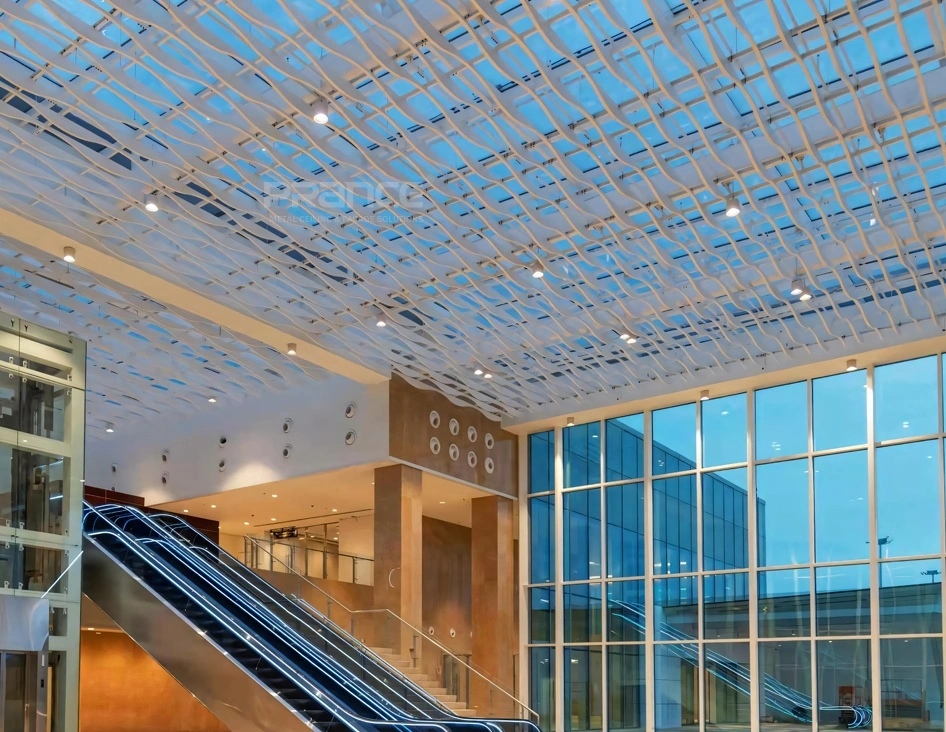
Interior dengan ruang terbuka kini menyeimbangkan dua prioritas yang saling bertentangan: untuk mengungkapkan kejujuran mekanis bangunan sekaligus memberikan kenyamanan akustik dan estetika yang halus di bawahnya. Plafon baffle adalah jawaban praktisnya. Plafon ini membentuk ritme dan cahaya, mengatur suara dengan kehalusan visual, dan membuat ruang terbuka tetap dapat diakses untuk sistem bangunan yang efisien. Bagi pemilik bangunan dan arsitek, pilihan ini strategis: mengurangi biaya tersembunyi dan menyederhanakan perawatan di masa mendatang sekaligus memberikan plafon yang berani dan khas yang terlihat bagus dalam fotografi dan dalam kehidupan nyata. Plafon baffle memungkinkan cahaya bermain di sepanjang ritme yang berulang, mengontrol garis pandang untuk branding, dan menciptakan zona tanpa menambah volume. Plafon ini juga fleksibel di bangunan multifungsi di mana penataan ruang penyewa terus berkembang.
Mengapa Rendering Sering Gagal di Lokasi
Keluhan umum yang sering muncul adalah: rendering tiga dimensi menarik minat klien, tetapi pemasangannya mengecewakan. Penyebabnya dapat diprediksi—kurangnya informasi lokasi, sumber pasokan yang tidak konsisten, dan keputusan desain yang tidak memperhitungkan kondisi lapangan. Ketika panel penyekat langit-langit dipesan sebagai profil standar yang tersedia, pemasang menghadapi pemotongan dan penyesuaian tak terduga yang merusak pola dan jadwal. Risiko tersebut berujung pada permintaan informasi (RFI), perubahan pesanan, dan klien yang frustrasi karena mengharapkan visi mereka terwujud. Proyek yang dipimpin oleh produsen menggunakan data terukur dan kontrol produksi untuk mencegah kejutan di lokasi dan menyelaraskan maksud estetika dengan realitas pemasangan.
Dari Pengukuran, Desain hingga Model Produksi
Keberhasilan datang dari pengalihan tanggung jawab lebih awal dalam proses. Ketika pengukuran menjadi dasar desain, dan desain mendorong produksi, gambar kerja mencerminkan lokasi sebenarnya dan komponen tiba dalam keadaan siap dipasang. Penyelarasan tersebut menjaga garis pandang, kualitas hasil akhir, dan tujuan akustik tanpa kompromi yang umum terjadi di lokasi.
Keunggulan Strategis: Mengapa Memilih Plafon Baffle?
Performa Akustik Unggul
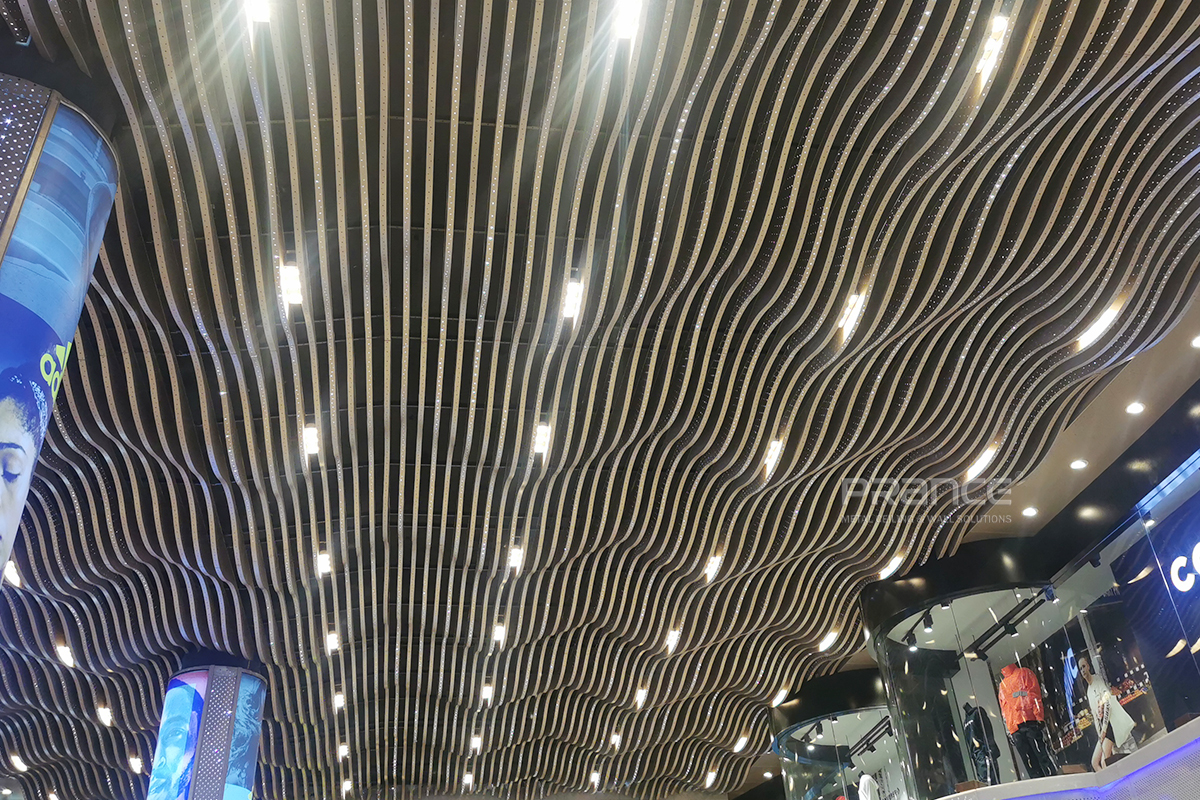
Sekat vertikal mencegat dan menyebarkan gelombang suara, mengurangi gema tanpa menutup ruang hampa. Untuk banyak ruangan, ini mencapai kompromi yang tepat antara keterbukaan dan kenyamanan akustik. Menentukan sekat langit-langit akustik memungkinkan tim desain untuk menyesuaikan penyerapan dengan penggunaan: sekat tinggi yang berjarak dekat untuk lobi yang didominasi oleh percakapan, atau sekat yang lebih lebar dan rendah untuk kebisingan latar belakang yang lebih lembut. Alih-alih hanya mengandalkan satu angka, para insinyur menerjemahkan peringkat NRC sekat langit-langit akustik menjadi geometri yang dapat ditindaklanjuti — menentukan tinggi sekat, persentase area terbuka, dan bahan pendukung untuk mencapai peningkatan yang nyata dalam kejelasan ucapan sambil tetap menjaga ruang hampa tetap terlihat.
Aliran Udara Tanpa Batas dan Keamanan
Karena sekat menempati area padat yang terbatas, ruang plenum terbuka tetap berfungsi. Sistem langit-langit sekat yang dirancang dengan baik meningkatkan efektivitas HVAC dengan menghindari pembatasan aliran udara yang tidak perlu. Sistem ini juga menyederhanakan strategi ekstraksi asap dan memudahkan penempatan kepala sprinkler dan sensor. Untuk proyek dengan persyaratan kode khusus, sekat aluminium tahan api dapat ditentukan dan dikoordinasikan sehingga sistem keselamatan dan tujuan visual dapat berjalan beriringan tanpa kompromi.
Skala Visual Dinamis dan Pilihan Material
Panel penyekat memberikan desainer kosakata skala: panjang, jarak, dan finishing yang bervariasi menciptakan pergerakan yang mengarahkan penghuni melalui suatu ruang atau menjadi titik fokus zona kedatangan. Panel penyekat langit-langit logam memberikan profil yang rapi dan kontemporer untuk interior perusahaan atau teknologi, sementara panel penyekat logam dengan motif kayu kustom memberikan kehangatan dan keselarasan merek tanpa beban perawatan kayu asli. Jarak terbuka juga memungkinkan pandangan sekilas yang terkontrol ke struktur atau instalasi yang terbuka ketika kejujuran tersebut mendukung narasi desain.
Keberlanjutan dan Manfaat Siklus Hidup
Aluminium dapat didaur ulang dan ringan, sehingga mengurangi emisi transportasi dan mendukung tujuan material sirkular. Sistem penyekat yang diproduksi dari paduan daur ulang dan dibuat dengan limbah minimal berkontribusi pada tujuan LEED dan pelaporan keberlanjutan perusahaan. Presisi pabrik juga mengurangi limbah di lapangan dan menghindari pengerjaan ulang yang intensif energi, sehingga meningkatkan kinerja lingkungan dan ekonomi proyek.
Pengukuran Presisi: Landasan Instalasi Tanpa Limbah untuk Plafon Baffle
Survei di Lokasi dan Integrasi BIM
Survei lokasi yang detail merupakan fondasi proyek. Produsen semakin banyak menggunakan pemindaian laser 3D dan overlay BIM untuk menangkap jalur MEP, bidang pelat lantai, dan kondisi plafon secara tepat. Model-model tersebut menjadi dasar pembuatan sekat langit-langit akustik gantung dengan potongan dan titik pemasangan yang presisi, meminimalkan perubahan di lokasi dan mencegah mentalitas "kita akan memperbaikinya di lapangan" yang mengganggu jadwal dan anggaran.
Evaluasi Struktur dan Desain Gantungan
Penilaian struktural awal mengidentifikasi di mana gantungan dapat ditempatkan dan bagaimana beban didistribusikan. Hal ini mencegah kelebihan beban pada pelat lantai atau penambahan penyangga yang terlihat yang mengganggu aliran visual. Desain gantungan yang tepat mempertahankan garis-garis panjang dan bersih yang membuat langit-langit penyekat begitu efektif sekaligus memastikan keamanan dan daya tahan jangka panjang.
Tujuan "Tanpa Pemotongan"
Tujuan praktisnya adalah untuk meminimalkan modifikasi di lapangan. Ketika komponen dibuat dengan toleransi yang terukur—dipotong, dilubangi, dan diberi label sebelumnya—pemasangan menjadi proses perakitan daripada proses pembuatan. Ini menghemat waktu, menjaga ruang yang ditempati lebih tenang selama pemasangan, dan mengurangi debu serta gangguan di lingkungan yang sedang beroperasi.
Rekayasa Desain: Dari Visi hingga Produksi
Gambar Kerja yang Menyelesaikan Antarmuka
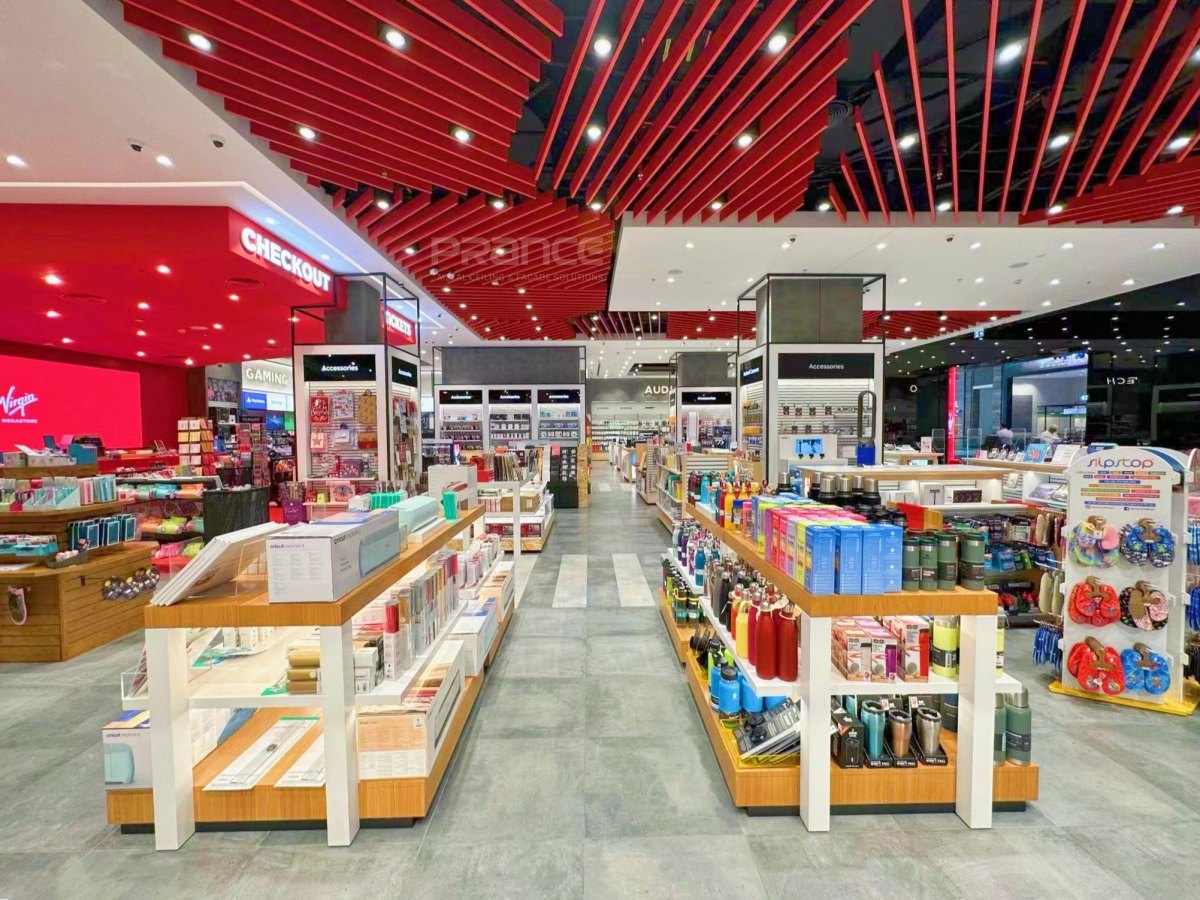
Gambar desain mengekspresikan maksud; gambar kerja membuatnya dapat dibangun. Dokumen siap produksi menyelesaikan interaksi dengan pencahayaan, sprinkler, diffuser HVAC, dan komponen audio visual. Dokumen tersebut menentukan toleransi sehingga garis pandang yang panjang tetap lurus, menunjukkan pengencang minimal, dan menunjukkan urutan pemasangan yang tepat untuk menjaga alur kerja yang teratur di lokasi.
Sistem Pembawa dan Pencahayaan Terintegrasi
Memilih penyangga yang tepat sangat penting. Penyangga berbentuk U menekankan tampilan yang tipis dan melayang, sementara penyangga berbentuk kotak cocok untuk kabel terintegrasi atau perlengkapan yang lebih berat. Mengintegrasikan pencahayaan linier di pabrik mengurangi penetrasi di lokasi dan menghasilkan garis pandang yang lebih bersih untuk langit-langit penyekat yang terpasang. Pemilihan penyangga yang cermat juga membantu memastikan setiap penyekat dapat diservis, dilepas, dan diganti.
Strategi Akustik dan Maket
Alih-alih mengutip satu angka NRC dan berharap yang terbaik, desain akustik yang efektif menggabungkan geometri dan material. Para insinyur mempertimbangkan tinggi sekat, jarak, dan lapisan pendukung untuk menargetkan frekuensi yang penting untuk ruangan tersebut. Maket—baik fisik maupun hasil rendering dengan fidelitas tinggi—memungkinkan para pemangku kepentingan untuk mendengar dan melihat bagaimana kinerja sekat suara untuk langit-langit dalam konteksnya, menghilangkan tebakan dan mengurangi potensi koreksi di tengah jalan yang mahal.
Produksi Terpadu: Kontrol Mutu untuk plafon penyekat dari Bahan Baku hingga Produk Jadi
Pilihan Material dan Kerataan Jangka Panjang
Memilih paduan dan perlakuan panas yang tepat memastikan kerataan yang konsisten dan kekakuan yang sesuai dalam jangka panjang. Mengontrol variabel-variabel ini secara internal mencegah pembengkokan dan perubahan bentuk yang dapat merusak komposisi langit-langit yang teliti.
Teknologi Finishing dan Kontrol Batch
Lapisan yang diaplikasikan di pabrik, termasuk lapisan bubuk yang tahan lama dan lapisan serat kayu transfer panas, menghasilkan warna dan tekstur yang konsisten di berbagai batch produksi. Konsistensi batch ini menghindari estetika tambal sulam yang dapat merusak citra visual suatu merek ketika komponen berasal dari berbagai pemasok.
Logistik, Pelabelan, dan Instalasi Plug-and-Play
Pengemasan dan pelabelan yang cermat—bagian-bagian dikelompokkan berdasarkan ruang dan orientasi—mengubah instalasi menjadi rangkaian perakitan yang efisien. Untuk proyek yang sensitif terhadap hunian, unit yang telah dirakit sebelumnya yang mencakup insulasi penyekat langit-langit atau pengisi akustik menghilangkan pekerjaan di lokasi yang panjang dan melindungi lapisan akhir yang halus selama pengangkutan.
Mengatasi Tantangan Proyek: Dari Konsep hingga Instalasi
Untuk proyek plafon komersial yang kompleks, bermitra dengan produsen berpengalaman seperti PRANCE dapat secara fundamental mengubah hasilnya. Ketika satu perusahaan mengelola alur kerja — mulai dari pengukuran lokasi yang tepat dan detail desain hingga produksi internal dan koordinasi pemasangan — akuntabilitas menjadi jelas dan banyak risiko proyek umum berkurang secara signifikan.
Proses dimulai dengan pengukuran laser beresolusi tinggi untuk secara akurat menangkap tata letak MEP, variasi pelat lantai, dan penetrasi langit-langit. Data ini diintegrasikan ke dalam model BIM dan diterjemahkan ke dalam gambar kerja siap produksi yang menyelesaikan benturan, menentukan bukaan pencahayaan dan sprinkler yang tepat, dan menentukan posisi gantungan yang akurat. Fabrikasi kemudian dilakukan secara ketat sesuai dengan model yang disetujui, memastikan bahwa setiap sekat tiba dalam keadaan sudah dipotong, sudah difinishing, dan diberi label dengan jelas untuk lokasi yang ditentukan.
Perencanaan logistik menyelaraskan pengiriman dengan urutan pemasangan, melindungi lapisan akhir dan menghindari kemacetan di lokasi. Selama pemasangan, koordinasi teknis dan verifikasi kualitas memastikan bahwa langit-langit yang telah selesai mencerminkan dengan tepat maksud desain asli sambil mempertahankan aksesibilitas layanan jangka panjang.
Pada intinya, bekerja sama dengan produsen seperti PRANCE menghilangkan ambiguitas dengan menciptakan satu titik tanggung jawab — mengurangi permintaan informasi (RFI), meminimalkan perubahan pesanan, dan memastikan bahwa sistem langit-langit yang sudah jadi berfungsi dan terlihat persis seperti yang dibayangkan.
Pertimbangan Praktis: Daya Tahan, Perawatan, dan ROI
Ketahanan di Lingkungan dengan Penggunaan Intensif
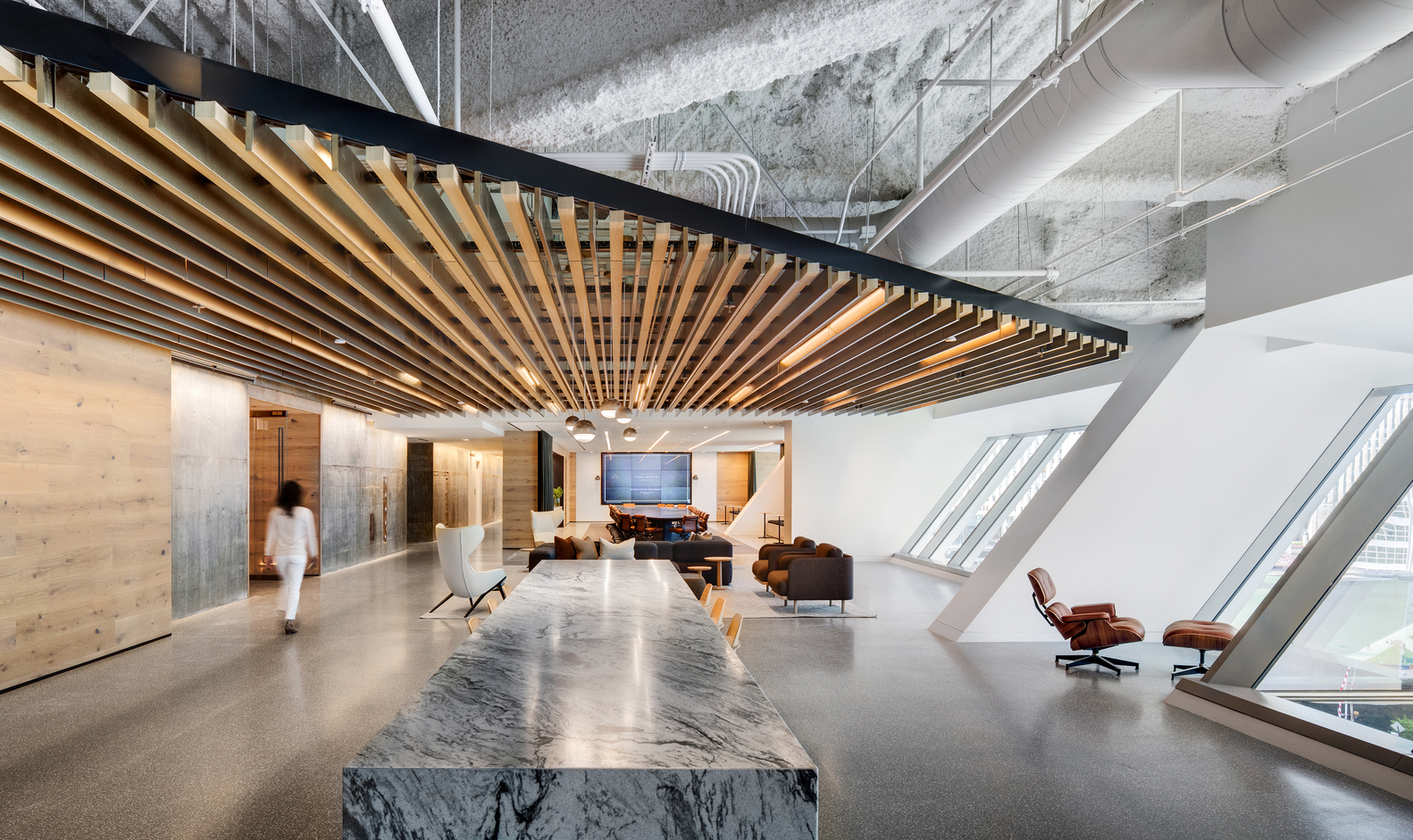
Panel penyekat aluminium kokoh, mudah dibersihkan, dan dapat diperbaiki pada tingkat komponen. Di pusat transportasi, ruang perhotelan, dan lingkungan ritel, jauh lebih murah untuk mengganti satu panel penyekat yang rusak daripada memperbaiki seluruh langit-langit lunak.
Pemeliharaan dan Akses
Desain elemen yang dapat dilepas ke dalam sistem penyangga memungkinkan akses rutin tanpa gangguan besar. Untuk pemeliharaan penerangan, AV, dan sprinkler, perlengkapan modular yang terintegrasi dengan sekat yang sudah dipotong sebelumnya menyederhanakan penggantian dan mengurangi waktu henti.
Nilai Siklus Hidup
Proses manufaktur terukur mengurangi limbah, memperpendek jadwal instalasi, dan menurunkan biaya perawatan berkelanjutan. Faktor-faktor tersebut mendorong penghematan siklus hidup yang seringkali melebihi premi awal yang relatif kecil, sehingga menghasilkan total biaya kepemilikan yang lebih baik bagi pemilik dan investor.
Tabel Perbandingan: Panduan Skenario
Skenario | Jenis Sekat yang Direkomendasikan | Mengapa Ini Berhasil |
Lobi perusahaan dengan pengumuman | Langit-langit peredam suara yang tinggi dan berjarak rapat. | Menyeimbangkan kejelasan suara dengan estetika ruang terbuka. |
Area transit (volume tinggi) | Panel peredam suara langit-langit logam tugas berat, tahan api. | Tahan lama dan terintegrasi dengan kontrol asap dan penyemprot air. |
Kanopi ritel (fitur merek) | Sekat logam motif serat kayu kustom | Kehangatan bermerek dengan perawatan minimal. |
Loteng industri yang telah direnovasi | Sistem penyekat yang ramping dan berjarak lebar. | Melestarikan karakter industri dan garis pemandangan. |
Pusat konferensi | Sekat langit-langit akustik gantung bertingkat dalam | Akustik yang dapat disesuaikan untuk acara dan presentasi |
Jika proyek Anda sudah beralih dari konsep ke dokumen, mintalah tinjauan pengukuran dan kelayakan dari pabrikan Anda. Penyelarasan awal menghemat biaya pengerjaan ulang yang mahal dan membantu Anda mengeksplorasi peluang optimasi seperti jalur pencahayaan terpadu, modul layanan pracetak, atau pilihan finishing yang menghemat waktu tanpa mengorbankan desain.
Kesimpulan: ROI dari Mitra Manufaktur Terpadu
Plafon penyekat memberikan fleksibilitas visual dan transparansi operasional yang penting untuk proyek ruang terbuka modern. Kombinasi pengukuran lokasi yang tepat, rekayasa yang cermat, dan fabrikasi yang terkontrol mengurangi kejutan, melindungi anggaran, dan mempertahankan visi desain. Satu mitra yang mengelola alur kerja pengukuran hingga produksi mengubah rendering menjadi kenyataan dengan lebih sedikit permintaan informasi (RFI), lebih sedikit perubahan pesanan, dan jalur yang lebih andal menuju hunian dan pendapatan.
Jika Anda sedang mengevaluasi solusi plafon untuk proyek mendatang, melibatkan PRANCE pada tahap desain awal dapat membantu memperjelas kelayakan teknis, mengoptimalkan konfigurasi sistem, dan menghindari penyesuaian yang mahal di kemudian hari. Membagikan gambar Anda untuk tinjauan awal seringkali merupakan cara paling sederhana untuk memastikan instalasi akhir selaras dengan maksud arsitektur dan realitas konstruksi Anda.
FAQ
Q1: Dapatkah langit-langit penyekat digunakan di lingkungan yang lembap atau semi-terbuka?
Ya. Pemilihan paduan yang tepat dan lapisan tahan korosi yang dipadukan dengan detail tepi yang cermat mencegah noda dan kerusakan pada kanopi dalam ruangan yang lembap atau semi-terbuka. Lapisan motif serat kayu dengan transfer panas tersedia dalam varian yang tahan terhadap kelembapan; kayu alami tetap rentan dan harus dihindari dalam kondisi basah.
Q2: Bagaimana cara mengakses penerangan dan sprinkler di atas sekat langit-langit?
Sistem pembawa dirancang sedemikian rupa sehingga sekat individual dapat dilepas tanpa memengaruhi elemen yang berdekatan. Produsen menyediakan gambar kerja yang menunjukkan lubang yang telah dipotong sebelumnya dan zona jarak bebas servis, sehingga memungkinkan perawatan tanpa pembongkaran skala besar.
Q3: Apakah panel peredam suara di langit-langit cocok untuk pemasangan ulang?
Tentu saja. Bobotnya yang ringan dan modularitasnya menjadikan panel langit-langit logam sebagai pilihan yang sangat baik untuk renovasi. Survei lokasi menyesuaikan posisi gantungan dan panjang panel dengan geometri yang tidak beraturan sehingga solusi tersebut terintegrasi dengan rapi dengan struktur dan instalasi yang ada.
Q4: Perbaikan akustik apa yang dapat saya harapkan dari peredam suara untuk langit-langit?
Harapkan pengurangan nyata pada gema frekuensi menengah dan tinggi yang meningkatkan kejelasan ucapan dan kenyamanan penghuni. Untuk kontrol frekuensi rendah, baffle sering dikombinasikan dengan penyerap terarah atau perangkap bass. Pemodelan akustik membantu menentukan kombinasi yang tepat untuk setiap ruangan.
Q5: Apakah lapisan akhir pada panel penyekat langit-langit logam akan tetap konsisten dari waktu ke waktu?
Lapisan akhir yang diaplikasikan di pabrik seperti pelapisan bubuk dan motif serat kayu transfer panas diaplikasikan dalam kondisi terkontrol untuk memastikan daya tahan dan konsistensi setiap batch produksi. Dengan pembersihan yang tepat dan perbaikan segera terhadap kerusakan kecil, lapisan akhir akan mempertahankan penampilannya selama bertahun-tahun dalam kondisi interior normal.