



Forros metálicos curvos: um guia de decisão para desempenho, design e valor.

O design de interiores moderno está indo além de planos retos e grades rígidas, em direção a espaços que respiram. Um teto metálico curvo bem executado pode guiar o movimento, emoldurar a luz e criar uma identidade memorável sem comprometer o orçamento. Para arquitetos e incorporadores que buscam tanto arte quanto durabilidade, um teto metálico curvo é mais do que uma escolha decorativa — é uma decisão estratégica que molda a experiência dos ocupantes, o desempenho operacional e a vida útil do empreendimento. Este guia se concentra em por que e como os sistemas de teto metálico curvo agregam valor duradouro em grandes projetos comerciais e o que priorizar desde a concepção até a instalação.
Fundamentos: Engenharia e Fabricação de Precisão
A resistência do alumínio
A elevada relação resistência/peso e a excelente conformabilidade do alumínio fazem dele o substrato preferido para sistemas de forro metálico curvo. Permite criar tanto arcos amplos e suaves quanto raios mais fechados, mantendo a carga estrutural previsível.
Isso significa suportes mais rasos, menos suportes personalizados e menor impacto na laje ou na estrutura do telhado, o que é uma vantagem prática na coordenação com os sistemas MEP (mecânicos, elétricos e hidráulicos) e as estruturas de sustentação. Em termos estéticos, o alumínio permite longos trechos contínuos que mantêm linhas de visão nítidas e minimizam a poluição visual nas junções.
Pré-fabricação em fábrica versus ajuste em campo
Painéis curvados em fábrica, produzidos com um único raio derivado de CAD, garantem consistência: cada painel se encaixa na posição projetada, preservando a continuidade da linha de visão. Painéis curvados no local ou cortados em obra introduzem erros cumulativos que se manifestam como folgas irregulares, juntas com espaçamento inconsistente e perda do ritmo visual pretendido.
A escolha de componentes pré-fabricados reduz a mão de obra no local, diminui o risco de retrabalho dispendioso e encurta os cronogramas de instalação — benefícios que se traduzem diretamente em menor risco geral do projeto e custos mais previsíveis para os desenvolvedores.
O mecanismo de suspensão
Sistemas de suporte especializados traduzem o raio de projeto em suportes e locais de fixação ajustáveis, permitindo que os painéis sejam instalados suavemente em superfícies côncavas e convexas. Imagine o sistema de suporte como a espinha dorsal do teto: quando dimensionado e instalado com precisão, o revestimento metálico acompanha o movimento sem deformações.
Essa abordagem coordenada entre a fabricação e o sistema de suspensão evita os desalinhamentos comuns em alternativas curvas mais baratas e simplifica o gerenciamento de tolerâncias no local quando as condições de fabricação não correspondem perfeitamente ao desenho base.
Superioridade funcional: desempenho que vai além da estética.
Gestão Acústica Avançada
Superfícies curvas dispersam o som, reduzindo reflexos agudos que tornam grandes salões e átrios ruidosos. Os projetistas podem combinar painéis metálicos perfurados com revestimento acústico para otimizar o ambiente: o teto preserva sua aparência metálica enquanto absorve a energia crítica de frequências médias e altas. Na prática, isso significa que é possível direcionar a inteligibilidade da fala e do sistema de som, mantendo a leveza e o brilho do metal, uma combinação que frequentemente supera alternativas de custo equivalente em aplicações reais.
Tecnologia de perfuração e controle visual
Os padrões de perfuração permitem equilibrar abertura e confinamento. De longe, uma curva perfurada parece um plano sólido; de perto, o padrão proporciona porosidade acústica e textura.
Os projetistas utilizam gradientes na densidade de furos para fazer a transição de espaços íntimos para volumes amplos sem alterar os materiais. A continuidade visual resultante reduz a carga cognitiva dos ocupantes, ao mesmo tempo que resolve os objetivos acústicos e de ventilação.
Segurança contra incêndio e durabilidade ambiental
O alumínio comporta-se de forma previsível quando exposto ao fogo e integra-se com estratégias de proteção passiva comumente exigidas em aeroportos, hospitais e outros edifícios de alta ocupação. Sua resistência à umidade e manchas o torna preferível ao gesso e a muitos produtos de madeira para interiores semi-expostos ou sujeitos a limpeza frequente.
Para projetos com alta umidade ou ciclos frequentes de limpeza, o alumínio mantém seu acabamento e integridade estrutural com intervenção mínima, o que representa uma vantagem prática para gestores de ativos que buscam soluções de baixa manutenção.
Fluxo de ar e integração de serviços
Tetos curvos podem ocultar com eficácia dutos complexos de HVAC, difusores e iluminação, mantendo o desempenho. Com planejamento prévio, os difusores podem ser instalados atrás de painéis perfurados e a iluminação linear pode ser embutida em perfis contínuos, de modo que o teto funcione como uma superfície tanto estética quanto funcional. Em resumo: um teto metálico curvo faz mais do que apenas ter uma boa aparência, tornando-se uma superfície de serviço integrada.
Estudo de Caso: Análise do ROI e do Valor do Ciclo de Vida
Um teto diferenciado é uma decisão que impacta diretamente o patrimônio, e não apenas um detalhe arquitetônico. Tetos com design exclusivo influenciam a percepção do cliente e podem acelerar a locação, melhorar a retenção de inquilinos e resultar em aluguéis mais altos. Quando os proprietários consideram os custos do ciclo de vida, os sistemas de metal curvo geralmente se destacam: o alumínio anodizado ou com pintura eletrostática a pó resiste ao desgaste, requer menos repinturas e permite o reparo de painéis individuais em vez de reformas completas e disruptivas.
O tempo de ocupação é crucial. Os sistemas modulares curvos de encaixe geralmente são instalados mais rapidamente do que as alternativas construídas no local, o que pode reduzir em semanas os prazos de acabamento e liberar receita mais cedo para os proprietários. Essa rapidez, aliada à menor necessidade de manutenção e à maior durabilidade do acabamento, ajuda a compensar o custo inicial mais elevado dos materiais e contribui para um menor custo total de propriedade ao longo de um período de 20 a 30 anos.
As considerações de sustentabilidade e ESG também favorecem o metal: o alumínio é altamente reciclável e frequentemente contém material reciclado pós-consumo, apoiando estratégias de materiais circulares e contribuindo para créditos LEED/BREEAM. A possibilidade de substituir apenas os painéis danificados reduz o desperdício em comparação com estratégias de demolição e substituição de toda a área.
Aplicações específicas do setor: onde as curvas fazem a diferença
Centros de transporte : Tetos metálicos curvos guiam visualmente o fluxo de passageiros, ao mesmo tempo que controlam grandes cargas acústicas. Um forro sinuoso, que se estende da calçada ao balcão de check-in, funciona como guia e atenuador acústico, resistindo a regimes de limpeza rigorosos e ao desgaste operacional.
Hotelaria e varejo: os tetos criam momentos. Um dossel curvo feito sob medida sobre uma recepção ou uma sanca escultural em uma loja conceito torna-se um elemento definidor da marca, coordenado com iluminação em camadas para proporcionar chegadas memoráveis.
Educação e saúde: Linhas suaves e orgânicas humanizam os interiores institucionais e reduzem o impacto visual dos sistemas mecânicos expostos. Painéis substituíveis permitem manutenção sem interrupções em ambientes de operação contínua, melhorando a higiene e reduzindo o tempo de inatividade.
Do conceito à instalação: superando os desafios do projeto
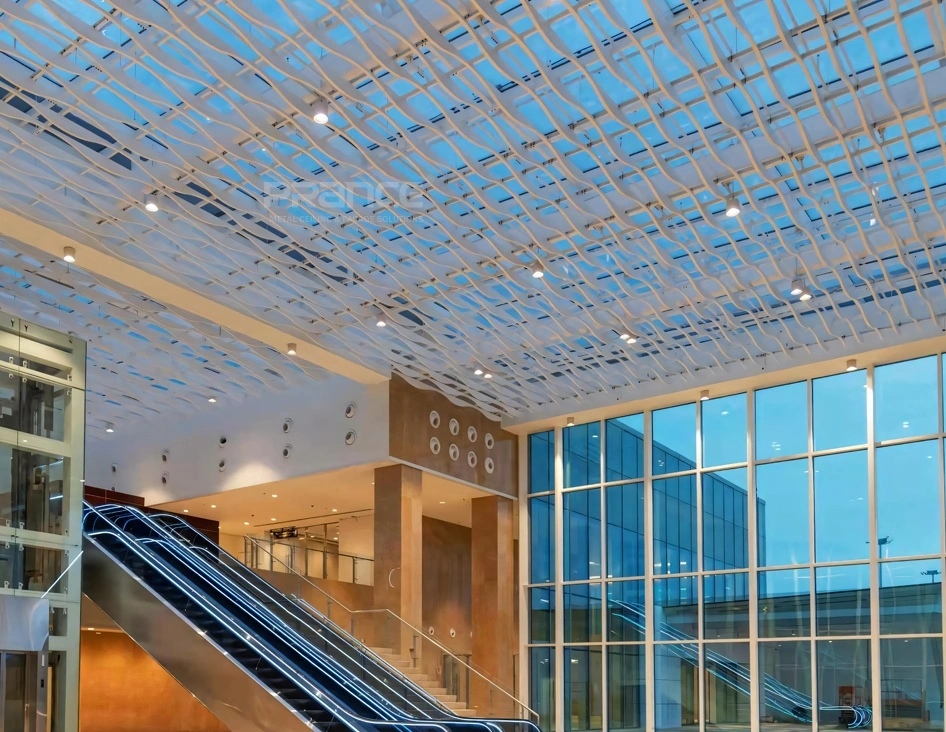
Projetos de tetos curvos de grande escala exigem mais do que relacionamentos padrão com fornecedores; requerem serviços integrados que reduzam os riscos na obra. A PRANCE é um bom exemplo de um modelo de solução completa. O processo começa com a medição precisa do local, utilizando escaneamento a laser e equipes de campo experientes para capturar a geometria real da obra.
Em seguida, a etapa de Aprofundamento do Projeto converte a intenção conceitual em desenhos de oficina detalhados que especificam raios reais, coordenadas de suporte, padrões de corte e penetrações de serviços. Finalmente, a Produção assume o controle com a cura em fábrica, o acabamento e o controle de qualidade em comparação com as maquetes aprovadas.
A vantagem é prática: menos solicitações de informação (RFIs), muito menos ajustes no local e uma maior probabilidade de que o teto instalado corresponda à renderização do designer. Para as construtoras, isso significa menos atrasos e um comissionamento previsível. Para arquitetos e designers de interiores, significa preservar a intenção do projeto e proporcionar o impacto experiencial desejado, sem as dores de cabeça da coordenação fragmentada.
Liberdade de Design: Materiais, Acabamentos e Estratégias Visuais
Os tetos metálicos curvos oferecem uma ampla paleta expressiva. A escolha do acabamento altera a percepção: os acabamentos em pó fosco transmitem calma e contemporaneidade; as superfícies anodizadas são sofisticadas e agradáveis ao toque; a textura da madeira transferida a quente para o metal confere o aconchego da madeira com a durabilidade do metal. Gradientes de perfuração e modulação de opacidade criam ênfase direcional e filtram a luz natural, permitindo que um único material desempenhe múltiplas funções em um espaço.
Considere as opções visuais práticas desde o início: onde estão as principais linhas de visão, como a luz incidirá sobre a superfície e o teto estará em uma área de alto contato? Acabamentos de alto brilho realçam a curvatura, mas mostram impressões digitais; revestimentos em pó foscos são mais discretos e geralmente preferíveis em ambientes de hotelaria ou educação.
Praticidade: Manutenção, Acesso e Durabilidade
Projeto de serviço. Sistemas em painéis permitem acesso local: painéis individuais são removidos de suportes para manutenção mecânica direcionada, em vez de exigir a remoção de grandes áreas. Essa capacidade é vital em instalações que funcionam 24 horas por dia, 7 dias por semana. Para ambientes com requisitos críticos de higiene, escolha acabamentos lisos e juntas seladas; para áreas de varejo com alto fluxo de pessoas, opte por revestimentos resistentes à abrasão e à limpeza frequente. Confirme os agentes de limpeza aprovados e os limites de abrasão com o fornecedor do acabamento para garantir a aparência a longo prazo.
Lista de verificação de especificações para tomada de decisão

Especificar um teto metálico curvo não se trata apenas de escolher um produto, mas sim de definir a intenção com precisão. Definições claras desde o início evitam retrabalho, improvisações no local e comprometimento visual posteriormente.
Geometria Primeiro
Forneça o raio exato, o comprimento do arco e os principais pontos de controle para cada zona do teto. Uma definição geométrica precisa garante que a curva que você projetar seja a curva que será fabricada e instalada.
Acabamento e Maquete Visual
Analise os revestimentos, os padrões de perfuração e a textura da superfície sob as condições reais de iluminação do projeto. Superfícies curvas interagem com a luz de forma diferente das superfícies planas, e as maquetes ajudam a evitar reflexos inesperados, alterações de cor ou distorções de padrão.
Planejamento de integração de serviços
Coordenar a iluminação, os sprinklers, os alto-falantes, os difusores e os sensores antes da fabricação. A integração pré-planejada elimina os riscos de cortes no local e preserva tanto a integridade estrutural quanto a continuidade visual.
Capacidade do Fornecedor
Dê prioridade aos fabricantes que oferecem suporte em CAD, desenhos de oficina e coordenação no local. O suporte técnico nesta fase é o que torna a geometria complexa do teto viável e previsível durante a instalação.
Tabela comparativa: Guia de cenários
Cenário | Sistema Recomendado | Por que isso se encaixa |
Hall de desembarque do aeroporto com alta reverberação | Alumínio perfurado e curvado de fábrica com revestimento acústico. | As curvas difundem o som; as perfurações e o revestimento controlam a reverberação, preservando a estética do metal. |
Lobby de hotel de luxo que busca uma atmosfera premium. | Forro contínuo de alumínio anodizado com iluminação linear integrada. | O acabamento anodizado transmite uma sensação premium e resiste ao contato frequente; a iluminação esculpe visualmente a curvatura. |
Loja principal com mudanças frequentes de exposição. | Painéis modulares curvos de encaixe, com acabamento em pintura eletrostática a pó. | Painéis modulares permitem alterações direcionadas; o revestimento em pó resiste ao desgaste e combina com a paleta de cores da marca. |
Corredor hospitalar que requer limpeza frequente. | Painéis côncavos lisos com revestimento em pó e juntas seladas. | Superfícies lisas são mais fáceis de desinfetar; juntas seladas limitam a contaminação e simplificam a manutenção. |
Átrio universitário com foco na clareza da fala | Curva de perfuração graduada com preenchimento acústico | O gradiente visual, aliado à absorção direcionada, equilibra a abertura com a privacidade da fala. |
FAQ
P1: Um teto metálico curvo pode ser usado em interiores úmidos ou semi-expostos?
Sim. O alumínio resiste à corrosão e, com revestimento em pó ou anodização adequados, tolera ambientes internos úmidos melhor do que o gesso ou a madeira. Para áreas semi-expostas com sal ou limpeza agressiva, especifique acabamentos de qualidade marítima e um programa de manutenção planejada para proteger a aparência a longo prazo.
P2: Como posso acessar as instalações mecânicas, elétricas e hidráulicas acima de um teto curvo para realizar manutenção?
Os sistemas metálicos curvos são normalmente divididos em painéis com acessos removíveis. É fundamental coordenar os locais de acesso com a equipe de instalações elétricas, hidráulicas e mecânicas (MEP) desde o início e confirmar os métodos de remoção dos painéis com o instalador para evitar cortes no local. Isso protege o acabamento e reduz o tempo de inatividade para manutenção de rotina.
P3: Um teto metálico curvo é adequado para a modernização de edifícios antigos?
Com certeza. Sua construção leve geralmente permite a suspensão em uma estrutura existente usando suportes suplementares. Medições prévias no local e uma maquete confirmam as folgas, a relação com os beirais existentes e a interface com outras áreas, limitando complexidades imprevistas.
Q4: Como se comportam os tetos curvos com iluminação e sprinklers integrados?
Quando coordenados na fase de projeto de detalhamento, os tetos curvos ocultam a iluminação linear e posicionam os sprinklers sem comprometer a conformidade com as normas. Utilize luminárias e ferragens especificadas para a curvatura e envolva o engenheiro de incêndio desde o início para que as aberturas e a cobertura mantenham a segurança e a estética.
Q5: Um teto metálico curvo limitará futuras adaptações ou alterações de design para os inquilinos?
Não, desde que a modularidade e o acesso sejam especificados. Os sistemas de encaixe permitem a remoção e reconfiguração de painéis individuais, e as zonas de serviço podem ser planejadas para que os futuros inquilinos possam adaptar os espaços com o mínimo de demolição. Isso preserva a flexibilidade e reduz as interrupções no ciclo de vida do produto.
Conclusão: Projetos arquitetônicos à prova do futuro
Os forros metálicos curvos unem liberdade expressiva a desempenho prático. São uma tela para a luz, uma ferramenta para controle acústico e um revestimento durável que envelhece com elegância. Para construtoras, oferecem diferenciação no mercado e menor risco de manutenção a longo prazo. Para arquitetos, expandem as possibilidades sem comprometer a viabilidade da construção. Os verdadeiros determinantes do sucesso são a coordenação e a seleção de parceiros: medições precisas, atenção aos detalhes e um fabricante capaz de traduzir a intenção do projeto em painéis uniformes com acabamento de fábrica.
Se o seu projeto depende do teto como elemento arquitetônico fundamental, envolva especialistas técnicos desde o início. Alinhar o raio de curvatura, os acabamentos e a integração das instalações na fase de projeto reduz os riscos da construção, controla os custos e garante que o teto metálico curvo final atenda exatamente ao que o conceito original promete. Entre em contato com um especialista da PRANCE para discutir o seu projeto.