



Prefabricated vs. Field-Assembled Metal Wall Panels for EPCs
The prefabricated metal wall panels are produced and processed in the factory and then transported to the construction site.
The assembled metal wall panels on-site require more construction site work. Each panel, fixture, and fastening component needs to be transported to the site and assembled or adjusted during the installation process.
For EPC contractors, choosing the wrong fabrication method can lead to installation delays, additional labor costs, material waste, and coordination problems.
The main difference lies in the location of most of the manufacturing and preparation work: factory production shifts more work to the outside of the site, while on-site assembly enables the contractor to be more flexible in responding to actual construction conditions.
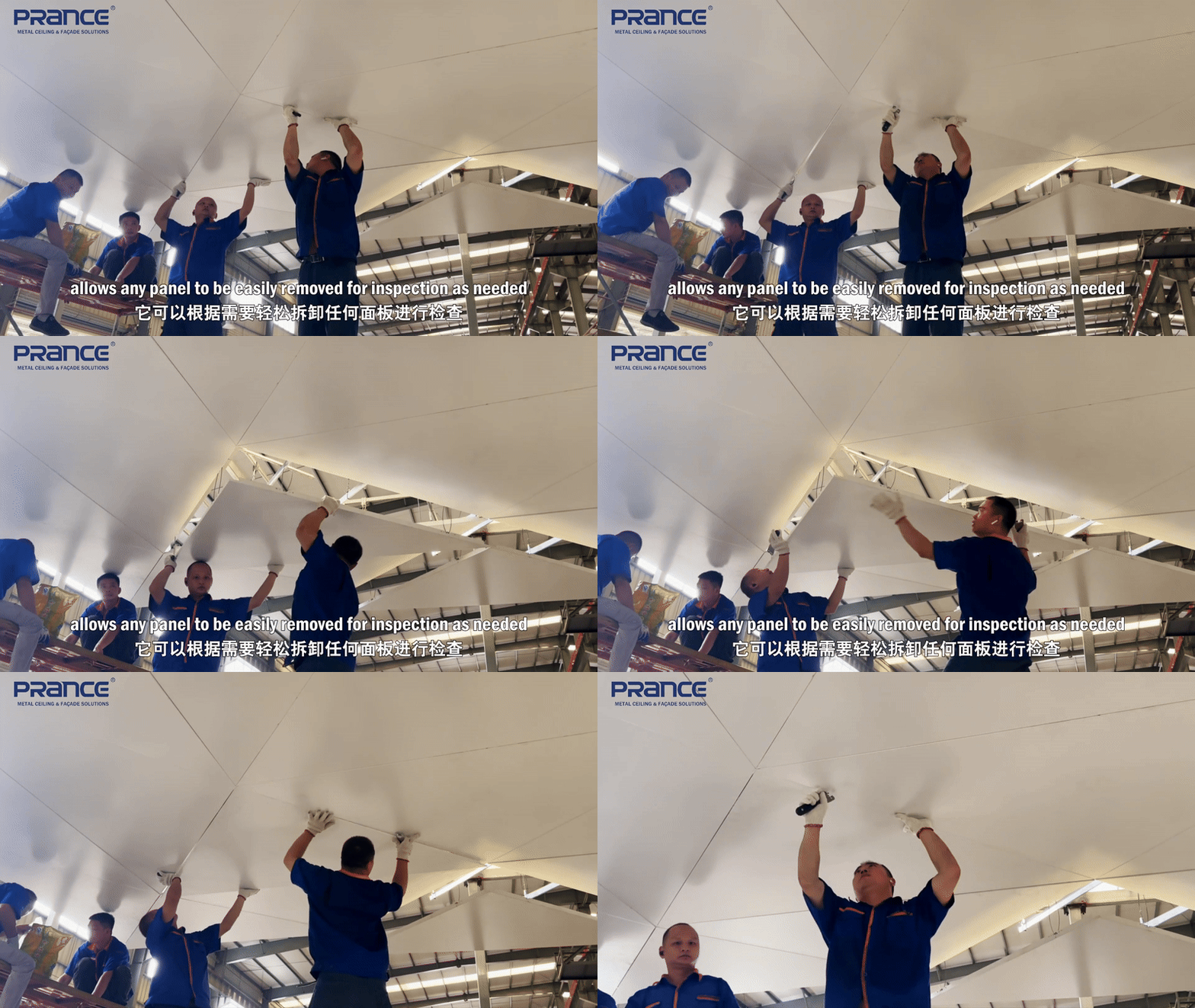
Prefabricated vs. Field-Assembled Metal Wall Panels: Key Differences
Both methods can be suitable for commercial and industrial projects. However, they create different demands for procurement, installation, and project coordination.
|
Comparison |
Prefabricated Metal Wall Panels |
Field-Assembled Metal Wall Panels |
|
Fabrication |
Mainly done in the factory |
Mainly done on-site |
|
Installation |
Less on-site work |
More on-site work |
|
Flexibility |
Less flexible after production |
Easier to adjust on-site |
|
Quality Control |
Checked before delivery |
Checked during installation |
|
Transportation |
Requires careful panel packaging |
Smaller parts are easier to transport |
The best option depends on panel size, building geometry, site conditions, labor availability, transportation, and project schedule.
Prefabricated Metal Wall Panels Improve EPC Project Efficiency
For large EPC projects, reducing unnecessary site work can improve coordination between different construction teams.
Reduce On-Site Labor Requirements
One advantage of prefabricated metal wall panels is that more fabrication work is completed before delivery.
Installers can focus on positioning panels, connecting the fixing system, checking alignment, and completing joints instead of performing extensive cutting and forming on-site.
This can be useful for projects with limited installation space or high labor costs.
Support More Predictable Construction Schedules
Factory production can proceed while other construction activities are taking place on-site, provided that drawings, dimensions, and approvals are finalized.
This creates opportunities to overlap fabrication and site preparation. However, it requires accurate measurements and early coordination between the manufacturer, EPC contractor, and installation team.
Late design changes or delayed approvals can still affect production and delivery schedules.
Improve Finish Consistency
Metal wall panels often cover large exterior surfaces. Differences in color, panel dimensions, or joint alignment can become noticeable across a building facade.
Factory-controlled fabrication helps maintain consistent dimensions and surface treatments. For example, aluminum panels can be produced with matching powder-coated, anodized, or PVDF finishes.
PRANCE provides different aluminum panel profiles and surface treatments through its metal wall panel systems.
Reduce On-Site Fabrication Waste
When panel dimensions and layouts are confirmed before production, materials can be cut and processed according to approved drawings.
This helps reduce unnecessary cutting and material adjustments at the construction site.
However, accurate field measurements are still important. Differences between actual building dimensions and design drawings may lead to fitting problems if they are not identified before fabrication.
When Field-Assembled Metal Wall Panels Make More Sense?
Prefabrication is not always the best solution. Some projects require more flexibility during installation.
Complex Building Shapes
Buildings with curved walls, irregular corners, or special shapes need careful measurements and panel adjustments.
For example, PRANCE supplied custom aluminum exterior panels for an 8,000 m² office facade project in Metro Manila, Philippines. The building had a curved facade that required custom panel sizes and accurate coordination.
This case shows why complex facade designs need detailed drawings and measurements before production.
Uneven Walls or Uncertain Site Dimensions
Existing buildings may have uneven walls or structural dimensions that differ from the original drawings.
In these cases, contractors should measure the actual site before finalizing panel production. Some installation details may also need adjustment to fit the existing structure.
This helps avoid panels that do not fit properly after delivery.
Limited Site Access
Large prefabricated panels need enough space for transportation, storage, and lifting.
If a project has narrow access routes or limited storage space, smaller panel components may be easier to move and install.
EPC contractors should check transportation routes, lifting equipment, and storage areas before choosing the panel size.
Metal Wall Panel Installation: 5 Key Factors EPCs Should Consider
A smooth metal wall panel installation starts with good planning. EPC contractors should pay attention to these five points:
1. Confirm Drawings and Panel Sizes
Check panel dimensions, layouts, joints, and fixing details before production. Clear drawings help prevent fitting problems during installation.
PRANCE provides custom metal panel solutions for different project requirements.
2. Check the Wall Structure
Make sure the supporting structure is level, stable, and ready for installation. Uneven walls or incorrect support positions can affect panel alignment.
3. Choose the Right Fixing System
Exposed fasteners are easier to inspect, while concealed clips provide a cleaner appearance. The fixing method should match the panel design and project requirements.
4. Protect Panels During Delivery
Use proper packaging and careful handling to prevent scratches, bending, and surface damage. Store panels in a clean, dry, and stable area before installation.
5. Check Joints and Finishes
After installation, inspect panel alignment, fasteners, joints, and surface finishes. For exterior walls, also check flashing and sealing details to help prevent water penetration.
How to Choose the Right Metal Wall Panel System for an EPC Project?
The right fabrication method depends on the facade design, construction schedule, site access, and quality requirements. EPC contractors should consider the following factors before making a decision.
Consider Facade Size and Panel Repetition
For large facade areas with repeated panel sizes, factory-prefabricated panels can help improve production consistency and reduce on-site work. For facades with many unique shapes, additional adjustments may be needed during installation.
Check the Construction Schedule
If the project has a tight schedule, factory production can take place while site preparation continues. However, shop drawings, dimensions, and material approvals should be confirmed early to avoid production delays.
Evaluate Site Access and Transportation
Large prefabricated panels require suitable transportation routes, storage areas, and lifting equipment. If the site has limited access, smaller components may be easier to handle and install.
Consider Building Geometry
Regular facade layouts are generally easier to plan for prefabrication. Curved walls, irregular corners, and special openings require more detailed measurements and coordination.
Conclusion
Prefabricated and on-site assembled metal wall panels both have their place in EPC construction.
Prefabrication is typically suitable for projects that require uniform surface effects, planned production, and reduced on-site construction; while on-site assembly offers greater flexibility when the construction conditions or panel details need to be adjusted.
For EPC contractors, coordinating with the experienced metal panel manufacturer PRANCE in advance can help control manufacturing quality, reduce installation issues, and ensure that the exterior wall project is in line with the overall construction schedule.
For projects requiring custom panel sizes, profiles, or finishes, PRANCE can support different metal wall panel requirements based on project drawings and specifications. You can share your project details with the team to discuss suitable panel solutions.
Please bring your drawings and contact our professional ceiling and curtain wall manufacturing team.
FAQs
1. What are the advantages of prefabricated metal wall panels?
Prefabricated metal wall panels move more fabrication work into the factory. They can help improve dimensional consistency, reduce on-site fabrication, and simplify installation planning.
2. Are prefabricated metal wall panels faster to install?
They can reduce on-site preparation and assembly work. However, actual installation time depends on panel size, fixing methods, site access, lifting equipment, and the readiness of the supporting structure.
3. What is the difference between factory fabrication and field assembly?
Factory fabrication prepares panels and components before delivery. Field assembly involves more cutting, fitting, fastening, and adjustment at the construction site.
4. What should EPC contractors check before metal wall panel installation?
They should confirm approved shop drawings, panel dimensions, structural supports, fixing details, joint locations, material finishes, and delivery schedules before installation.
5. Can prefabricated metal wall panels be used for custom facade designs?
Yes. Factory fabrication can support custom panel sizes, profiles, patterns, and finishes. Complex designs still require detailed engineering, accurate measurements, and coordinated installation drawings.